Giving Tuesday is a global day of charitable giving held every year on the first Tuesday after Thanksgiving. Since its founding in 2012, it has grown into one of the most powerful fundraising moments of the year — with nonprofits, schools, and community organizations collectively raising billions of dollars in a single 24-hour period.
For nonprofits, Giving Tuesday isn’t just a date on the calendar. It’s an opportunity to re-engage your donor base, attract new supporters, and build lasting momentum heading into the end of the year. Done right, a well-planned Giving Tuesday campaign can be your single biggest fundraising day of the year.
In this guide, you’ll find everything you need to know: what Giving Tuesday is, how it started, the best strategies to raise money, and how to make the most of this annual giving event for your organization.
What is Giving Tuesday?
Giving Tuesday is an annual global day of charitable giving that takes place every year on the first Tuesday after Thanksgiving. Also called the “Global Day of Giving,” it was designed as a generosity-focused counterpoint to the consumer spending of Black Friday and Cyber Monday.
On Giving Tuesday, millions of individuals, nonprofits, businesses, and communities worldwide come together to donate, volunteer, and raise awareness for causes they believe in. For nonprofits, it represents one of the highest-traffic fundraising days of the year — a moment when donor intent and public goodwill are both at their peak.
Nonprofits that participate in Giving Tuesday often see what’s called the “Giving Tuesday Effect” — a surge in both donations and visibility that can extend well beyond the day itself, re-energizing their donor base heading into December.
What is the history of Giving Tuesday?
Giving Tuesday was founded in 2012 by the Belfer Center for Innovation & Social Impact at the 92nd Street Y (92Y), a cultural and community center in New York City, in partnership with the United Nations Foundation. The goal was simple: create a day that redirected the energy and enthusiasm of the holiday shopping season toward giving back.
The inaugural Giving Tuesday was held on November 27, 2012. It quickly caught fire on social media, attracting nonprofits, businesses, and everyday donors around the world. By 2023, Giving Tuesday had grown into a global movement spanning 80+ countries, with billions of dollars raised each year on a single day. In 2023 alone, Americans gave an estimated $3.1 billion on Giving Tuesday.
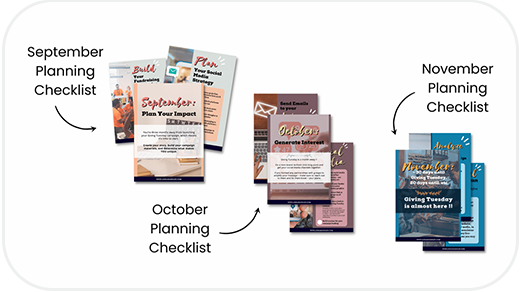
Our 3 month - Get Ready for Giving Tuesday Checklist
The Power of Giving Tuesday for Nonprofits
For nonprofits, Giving Tuesday is one of the most impactful fundraising opportunities of the year. The combination of heightened public awareness, media attention, and social media momentum creates conditions where donors are actively looking for causes to support — often with credit card in hand.
Beyond dollars raised, Giving Tuesday helps nonprofits grow their donor base. First-time donors acquired on Giving Tuesday often go on to become recurring supporters, making the long-term value of this day far greater than the initial gift.
Giving Tuesday also offers an unmatched visibility boost. Participating in the national conversation — even with a modest campaign — can put your organization in front of thousands of new potential supporters who may never have heard of your work. It’s one of the few days of the year when the general public is genuinely looking for organizations to give to.
What are the best ways to raise money on Giving Tuesday?
To maximize the success of your Giving Tuesday campaign, it's essential to have a solid plan in place. Here are some effective strategies you can adopt to make the most of this day:
1. Start Early:
Begin your Giving Tuesday preparations several weeks or even months in advance. This will give you sufficient time to craft an effective strategy and promote it through various channels.
2. Leverage Online Platforms:
Utilize social media platforms and other online tools to spread the word about your campaign and make it stand out.
3. Involve Volunteers and Staff:
Your volunteers and staff are some of your most powerful assets on Giving Tuesday. Encourage them to share your campaign on social media, send personal messages to their networks, or even host small peer-to-peer fundraising pages of their own. A personal ask from someone a donor knows and trusts is far more effective than a cold email from an organization. Consider hosting a kickoff event or online briefing the week before Giving Tuesday to get your team excited and aligned on talking points.
Host a Virtual or In-Person Event:
Giving Tuesday is an opportunity to bring your community together. A virtual fundraising stream, a live Q&A with your executive director, or a community open house can create energy and urgency around your campaign. Events give donors a reason to tune in and take action right now — rather than bookmarking your donation page for later. Even a simple Facebook Live or Instagram countdown can make your campaign feel more like an event and less like a newsletter.
Use Direct Mail to Reach Offline Donors:
Not all your supporters live on social media. A well-timed direct mail piece — arriving in the week before Giving Tuesday — can drive donations from loyal mid-level donors who prefer writing a check over clicking a link. Keep the letter short, personal, and specific: tell one story, state your goal, and include a clear reply envelope or URL. Pairing a direct mail piece with a follow-up email or phone call significantly increases response rates.
The Role of a Fundraising Consultant
If your nonprofit is newer to Giving Tuesday or has struggled to gain traction in past years, working with a fundraising consultant can make a meaningful difference. A good consultant will help you set a realistic fundraising goal, build out your campaign messaging, and create a multi-channel strategy that goes beyond a single email blast.
Consultants can also help you identify what’s not working. Many small nonprofits unknowingly leave money on the table by failing to segment their donor list, ignoring lapsed donors, or relying entirely on organic social media. A consultant brings an outside perspective and practical tools to close those gaps.
Think of it as a short-term investment with year-round impact. The strategies you build for Giving Tuesday — compelling storytelling, clear calls to action, donor follow-up sequences — are the same ones that power your entire development program.
Why Hire a Fundraising Consultant for Giving Tuesday?
Giving Tuesday rewards nonprofits that plan ahead, communicate clearly, and show up consistently across multiple channels. A fundraising consultant can help you do all three — without requiring you to figure it all out on your own.
For many smaller organizations, the biggest barrier isn’t enthusiasm; it’s capacity. A consultant can step in to fill the gaps: writing your email sequence, creating your campaign timeline, coaching your board on how to make personal asks, or helping you set a stretch goal that’s ambitious but realistic.
If you’ve been running the same Giving Tuesday approach for the past few years without seeing growth, a fresh perspective from an outside expert might be exactly what your campaign needs.
Final Thoughts:
Giving Tuesday is one of the most powerful fundraising opportunities a nonprofit has all year — and the organizations that treat it with real intention consistently outperform those that show up at the last minute with a generic email.
The good news is that you don’t need a massive budget or a large team to run a successful Giving Tuesday campaign. You need a clear story, a specific goal, a plan to reach donors across multiple channels, and the follow-through to thank them afterward. Start early, stay consistent, and make it easy for people to say yes.
Whether you’re running your first Giving Tuesday campaign or looking to significantly grow your results, the strategies in this guide will give you a strong foundation to build on.
Frequently Asked Questions About Giving Tuesday
What is Giving Tuesday and when does it take place? Giving Tuesday is an annual global day of charitable giving that takes place on the first Tuesday after Thanksgiving — typically in late November or early December. It was founded in 2012 to encourage generosity as a counterpoint to the consumer-focused Black Friday and Cyber Monday.
How did Giving Tuesday start? Giving Tuesday was created in 2012 by a team at the Belfer Center for Innovation & Social Impact, part of the 92nd Street Y in New York City. It quickly grew into a global movement, using social media to inspire millions of donors worldwide.
How much money is raised on Giving Tuesday each year? Giving Tuesday consistently raises hundreds of millions of dollars globally each year, with totals growing annually. In the U.S. alone, billions have been raised cumulatively since the movement began in 2012.
How can nonprofits prepare for Giving Tuesday? The most effective nonprofits start planning 2–3 months in advance. Key steps include setting a fundraising goal, creating compelling campaign messaging, leveraging social media, engaging email lists, and using peer-to-peer fundraising tools.
Do I need a fundraising consultant for Giving Tuesday? Not necessarily — but a fundraising consultant can help smaller nonprofits develop strategy, sharpen messaging, and avoid common mistakes. It's especially valuable for organizations running their first major Giving Tuesday campaign.
What online tools work best for Giving Tuesday fundraising? Platforms like GiveButter, Donorbox, and Classy are popular choices for Giving Tuesday because they offer easy donation pages, peer-to-peer fundraising, and social sharing tools — many with free tiers available.