Consistent Client Engagement: How to Build Trust and Business Momentum
Consistent client engagement is the practice of showing up for your audience in reliable, valuable ways — through emails, content, follow-ups, and personal touchpoints — so that trust builds over time and curious prospects become paying clients. For small businesses and service providers, it's not about posting every day or flooding inboxes. It's about creating a steady, predictable rhythm that keeps your business top of mind. This post breaks down what consistent engagement really looks like, why it matters more than frequency, and the simple steps you can take to start building momentum today.
Most small businesses and service providers know the struggle: you connect with someone once (maybe they download a free resource, attend your webinar, or meet you at a networking event) and then… nothing. The momentum fades. (updated May 2026)
The truth is, it’s not enough to just make a first impression.
What turns visibility into growth is what you do after that first touchpoint. And that’s where engagement comes in.
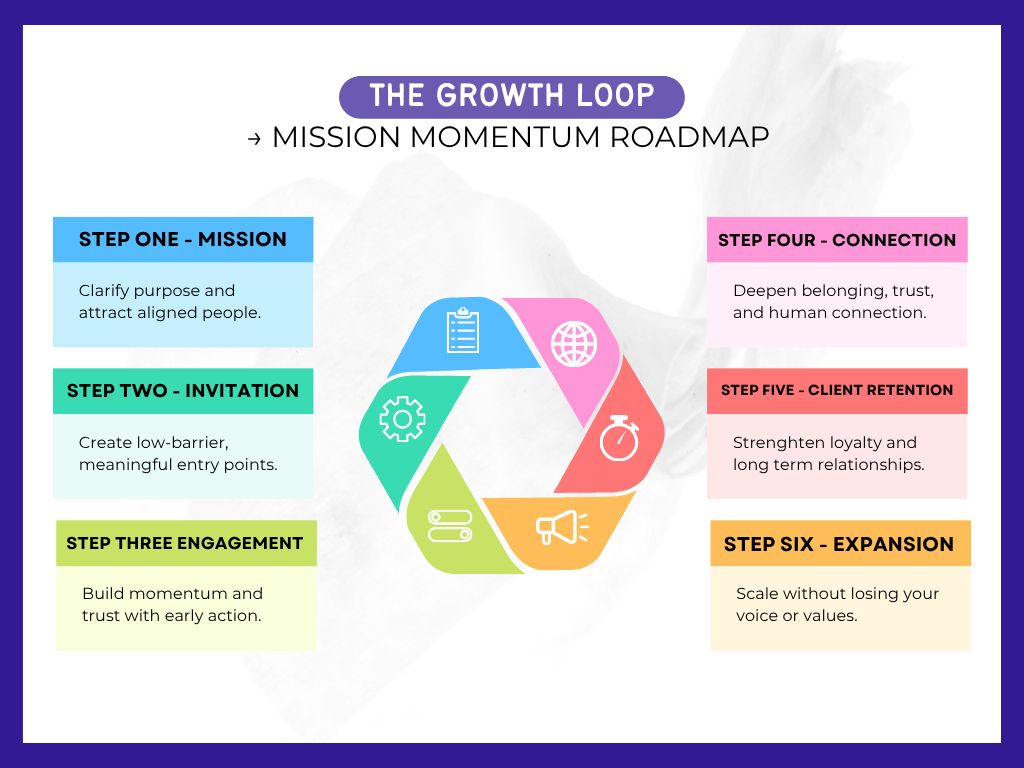
Inside myGrowth Loop Framework, engagement is Phase 3 for a reason: it’s the bridge between inviting someone into your world and building a real connection that leads to long-term business relationships.
Let’s break down why consistent engagement matters, what it looks like in action, and how it creates lasting momentum for your business.
What Does Consistent Engagement Really Mean?
Engagement is one of those business buzzwords that gets thrown around a lot. But here’s the thing… it’s not about chasing likes, comments, or quick replies.
Consistent engagement means showing up for your audience in reliable, valuable, and human-centered ways.
It’s the steady drumbeat of:
Emails that provide value (not just sales pitches).
Content that educates, inspires, or solves problems.
Thoughtful follow-ups that make people feel seen.
Ongoing touchpoints that reinforce trust over time.
Engagement is about building familiarity. And familiarity is what turns someone from a curious visitor into a loyal client.
Want to see how engagement fits into the bigger picture? Explore Phase 3 of theGrowth Loop framework.
Why Consistency Matters More Than Frequency
There’s a myth in marketing that you have to be everywhere all the time. Post daily on social media, send multiple emails a week, and constantly create new content… or risk being forgotten.
But consistency doesn’t mean overwhelming yourself (or your audience).
It’s not about how often you show up, it’s about how reliably you show up.
For example:
A nonprofit sending a monthly impact update builds more trust than one sending five donation asks in a week.
A consultant who checks in with leads quarterly stays top of mind without being pushy.
A service provider sharing one high-value blog post each week builds authority faster than one posting low-effort content daily.
Consistency creates predictability. And predictability builds trust.
Engagement as the Bridge Between Invitation and Connection
In the Growth Loop, Phase 2 is Invitation (how you welcome someone in). Phase 4 is Connection (how you deepen the relationship).
Engagement is the bridge.
Without consistent engagement, invitations don’t lead anywhere. You might have someone download your guide or attend your webinar, but if you don’t keep showing up, they’ll forget about you.
On the flip side, if you engage consistently, every touchpoint nudges them closer to connection. It’s how a curious prospect becomes a paying client.
See how the six phases build on each other in myGrowth Loop Framework.
4 Types of Engagement That Keep Clients Coming Back
So what does consistent engagement actually look like? Here are four powerful types you can build into your business.
1. Educational Content
Teaching builds trust. Whether it’s a blog post, a video, or a podcast, when you provide valuable information that helps your audience solve a problem, you position yourself as the go-to resource.
Pro tip: Choose content topics that directly connect to your offers. If you’re a grant consultant, write about common mistakes in applications. If you’re a coach, share insights on the mindset shifts your clients need most.
2. Personal Stories and Updates
Engagement isn’t just about being helpful, it’s also about being human. Sharing personal stories, client wins, or behind-the-scenes updates helps your audience feel like they know you.
People trust people, not logos. Don’t underestimate the power of a short story that reminds your audience, “I’m just like you.”
3. Interactive Touchpoints
Sometimes the best engagement is two-way. Think polls, surveys, Q&A sessions, or small group discussions. When your audience participates, they feel invested in the relationship.
These interactive touchpoints don’t just engage your audience, they give you insight into what they need, so you can serve them better.
4. Client Success Stories
One of the most effective ways to engage your audience is to highlight stories of transformation. Case studies, testimonials, and before/after examples show the real-world results of your work.
It’s not about bragging. It’s about painting a picture of what’s possible for your audience.
Common Pitfalls in Engagement (and How to Fix Them)
Even with the best intentions, engagement can go off track. Here are three common mistakes to watch for:
Ghosting after the first touchpoint. If you don’t follow up consistently, people forget you.
Only showing up during promotions. Engagement can’t just happen when you want to sell something.
Generic or irrelevant content. If your engagement doesn’t feel tailored to your audience’s needs, it won’t resonate.
The fix? Create a simple engagement plan you can sustain, focused on quality and relevance.
Want help designing an engagement plan that fits your business? The Growth Loop framework gives you the roadmap.
How Consistent Engagement Creates Momentum
Engagement is more than “keeping in touch.” It creates momentum, the kind of energy that moves your business forward steadily instead of in unpredictable bursts.
Here’s how:
Familiarity breeds trust. The more people see you show up consistently, the more they believe you’ll deliver consistently as a client partner.
Trust leads to conversion. Engaged audiences are far more likely to say yes to your offers.
Momentum fuels retention. Clients who feel engaged stick around longer and refer others.
Momentum isn’t built in one viral moment. It’s built in the slow, steady drumbeat of consistent engagement.
A Simple Engagement Framework You Can Start Today
Not sure where to begin? Try this three-step process:
Step 1: Choose Your Anchor Channel
Pick one place where you’ll commit to consistent engagement (email, blog, LinkedIn, etc.). This ensures you don’t stretch yourself too thin.
Step 2: Create a Repeatable Rhythm
Decide how often you’ll show up and stick to it. Maybe it’s weekly emails or monthly webinars. Consistency matters more than frequency.
Step 3: Layer in Personal Touchpoints
Add follow-ups, quick check-ins, or client appreciation notes. These personal touches keep the relationship warm between your bigger content pieces.
Why Engagement Is Essential for Sustainable Growth
Visibility gets you noticed. Invitations get you in the door. But engagement is what keeps people in your world long enough to build trust and move toward working with you.
When engagement becomes a system, not just an afterthought, you create a steady flow of opportunities. That’s what makes the Growth Loop sustainable.
Without engagement, you’re stuck starting over again and again. With engagement, you build momentum that carries you forward.
Ready to build momentum in your business? See how engagement fits into the 6-Phase Growth Loop framework.
Final Thoughts: Consistency Wins
In the end, engagement isn’t about perfection. It’s about consistency.
When you show up regularly with value, care, and authenticity, you turn strangers into followers, followers into clients, and clients into long-term partners.
That’s the real art of engagement and why it’s at the center of the Growth Loop.
So ask yourself:
How am I engaging with my audience right now?
Am I showing up consistently or only when I need something?
What one engagement action can I commit to every week?
Start small. Stay consistent. And watch the momentum build.
Discover how engagement (and all six phases of the Growth Loop) can help you attract, retain, and expand your client base. Explore the full Growth Loop Framework today!
“✍️ Take five minutes right now to write out your engagement rhythm — who you’ll follow up with, how you’ll add value, and when.
Consistency builds trust. Start today.”
Frequently Asked Questions About Consistent Client Engagement
What is consistent client engagement? Consistent client engagement means showing up for your audience regularly with relevant, valuable content and personal touchpoints — not just when you have something to sell. It builds familiarity, trust, and momentum over time.
How often should I engage with my audience? Frequency matters less than reliability. Whether it's weekly emails, monthly check-ins, or a bi-weekly blog post, what matters most is that your audience can count on hearing from you. Pick a rhythm you can sustain and stick to it.
What are the best ways to engage clients consistently? The most effective approaches include educational content (blog posts, videos), personal stories and updates, interactive touchpoints like polls or Q&As, and client success stories or case studies.
Why does consistent engagement matter for small businesses? For small businesses, trust is everything. Consistent engagement keeps you top of mind, builds credibility, and dramatically increases the likelihood that a prospect will say yes when you make an offer.
What is the difference between engagement and just posting on social media? Social media posting is one channel for engagement, but true consistent engagement goes beyond it — it includes email follow-ups, personal check-ins, and content across multiple touchpoints that together form a relationship over time.